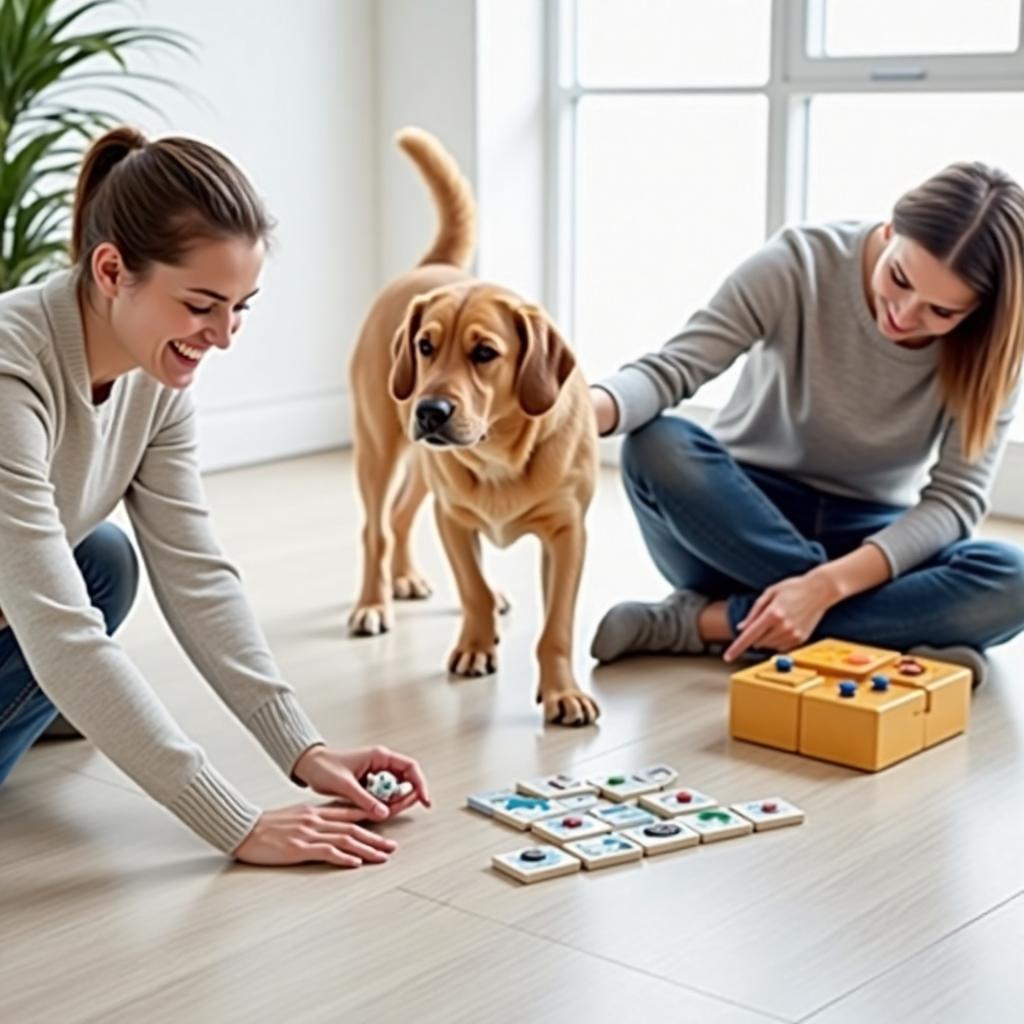
Keeping an indoor pet happy and healthy goes far beyond providing food, water, and a cozy place to sleep. One of the most overlooked aspects of pet care is mental stimulation. Pets, whether they are dogs, cats, rabbits, or even birds, have complex brains that need regular exercise. Without enough mental engagement, indoor pets can develop a range of behavioral problems, including destructive chewing, excessive barking or meowing, aggression, over-grooming, and even depression. Pet mental stimulation games for indoor pets are not just a luxury; they are an essential part of responsible pet ownership. These games challenge your pet’s mind, tap into their natural instincts, and provide a rewarding outlet for their energy when outdoor space or free roaming is limited. In this article, we will explore a wide variety of games and activities designed to keep your indoor companions sharp, content, and well-adjusted.
Many pet owners assume that physical exercise is enough, but a pet can be physically tired and still mentally restless. For indoor pets, especially those living in apartments or homes without safe outdoor access, the lack of novel scents, sights, and sounds can lead to boredom. Boredom in pets is often mistaken for bad behavior. A dog that shreds the couch while you are at work or a cat that knocks items off the counter is not being spiteful; they are simply trying to create their own entertainment. By introducing structured mental stimulation games into your daily routine, you can redirect that energy into positive, enriching activities. These games strengthen the bond between you and your pet, reduce anxiety, and can even slow cognitive decline in senior animals.
The beauty of mental enrichment is that it does not require expensive toys or a large amount of space. Many of the best games can be made with household items like cardboard boxes, old towels, muffin tins, and toilet paper rolls. Whether you have a high-energy puppy, a curious senior cat, or a clever rabbit, there is a mental stimulation game in this guide that is perfect for your furry friend. Read on to discover how to transform your indoor environment into a cognitive playground that keeps boredom at bay and promotes a calm, happy pet.
Why Mental Stimulation Matters for Indoor Pets
Indoor pets live in a controlled environment that is often predictable and static. While this is safe and comfortable, it can also be intellectually stifling. In the wild, animals spend a significant portion of their day foraging for food, exploring new territories, solving problems to access resources, and interacting with their environment. Domesticated indoor pets have these needs hardwired into their DNA, but they no longer have to work for their meals. This gap between instinct and opportunity is a primary source of stress and boredom. Mental stimulation games bridge this gap by giving pets a job to do. They provide a sense of purpose and accomplishment, which is deeply satisfying for an animal’s psychological well-being.
Signs that your indoor pet may need more mental stimulation include:
- Destructive behavior: Chewing furniture, digging at carpets, scratching walls, or shredding pillows.
- Excessive vocalization: Barking, whining, meowing, or squawking for no apparent reason.
- Hyperactivity or restlessness: Pacing, inability to settle down, or constant movement.
- Over-grooming or self-mutilation: Licking paws raw, pulling out fur, or plucking feathers.
- Attention-seeking behavior: Nudging, pawing, or interrupting you constantly.
- Changes in appetite or sleep patterns: Eating out of boredom or sleeping excessively due to lack of engagement.
If you notice any of these signs, it is time to add more mental enrichment to your pet’s day. The good news is that even 10 to 15 minutes of focused mental games twice a day can have a profound impact. Mental exercise can be just as tiring as physical exercise. In fact, a 15-minute training session or puzzle game can tire a dog out faster than a 30-minute walk around the block. This is because the brain uses a huge amount of energy when it is actively problem-solving. For indoor pets with physical limitations, such as senior dogs with arthritis or cats recovering from surgery, mental games are a lifesaver for maintaining quality of life without overexerting them.
How to Choose the Right Mental Stimulation Game
Not every game is suitable for every pet. When selecting mental stimulation activities, consider your pet’s species, age, personality, physical abilities, and chewing habits. A game that is too difficult will frustrate your pet, while a game that is too easy will fail to engage them. The goal is to find the sweet spot where your pet is challenged but can still succeed with effort. Start with simple puzzles and gradually increase the difficulty as your pet learns the rules. Always supervise your pet during new games, especially if the game involves small parts, food, or materials that could be ingested.
Here are some key factors to consider:
- Species-specific behavior: Dogs often enjoy sniffing, chewing, and retrieving. Cats prefer stalking, pouncing, and batting. Rabbits and guinea pigs love foraging and digging. Choose games that align with natural instincts.
- Food motivation: Most pets are food-motivated, but some are more play-motivated. Use high-value treats for puzzles to keep interest high. For pets on a diet, use a portion of their regular kibble or low-calorie vegetables.
- Safety first: Avoid toys with small parts that can be swallowed. Do not use plastic bags, sharp objects, or materials that can splinter. Always choose pet-safe, non-toxic materials.
- Age and physical ability: Puppies and kittens have short attention spans and need simple, fast games. Senior pets may need games that do not require a lot of jumping or twisting. Adjust the game’s physical demands accordingly.
- Chewing strength: If you have a power chewer, avoid cardboard puzzles that can be destroyed and ingested quickly. Use durable rubber toys or heavy-duty plastic puzzles instead.
Once you understand your pet’s preferences and limitations, you can start building a rotation of games. Variety is key. Just like humans get bored with the same routine, pets also benefit from novelty. Rotate toys and puzzles every few days to keep your pet’s interest high. Now let’s dive into specific mental stimulation games for indoor pets, broken down by species.
DIY Mental Stimulation Games for Indoor Dogs
Dogs are natural scavengers and problem-solvers. They experience the world primarily through their noses, and a dog’s sense of smell is estimated to be between 10,000 to 100,000 times more acute than a human’s. This means that scent-based games are incredibly enriching for dogs. Here are some effective mental games you can set up indoors with minimal supplies.
The Snuffle Mat Scavenger Hunt
A snuffle mat is a mat made of fleece strips tied onto a rubber or plastic base. It mimics the experience of foraging for food in grass. You can purchase a snuffle mat or make your own by tying strips of fleece onto a sink mat or a rubber mat with holes. To play, simply sprinkle your dog’s kibble or small treats into the fleece strips. Your dog will have to use their nose to root around and find the food. This game slows down fast eaters, provides intense mental stimulation, and is suitable for dogs of all ages. For an added challenge, you can hide a few extra special treats deep within the mat.
The Muffin Tin Puzzle
This is a simple and effective DIY puzzle that uses items you already have in your kitchen. Take a standard muffin tin, place a few small treats or pieces of kibble in some of the cups, and cover each cup with tennis balls. Your dog will have to figure out how to remove the tennis balls to access the treats. This game encourages problem-solving and persistence. Start by covering only a few cups and gradually cover all of them as your dog becomes more proficient. If tennis balls are a choking hazard for your dog, use larger balls or hard rubber toys that cannot fit in their mouth.
The Treat-Rolling Bottle
Take an empty plastic water bottle, remove the cap, and the plastic ring around the neck, and cut a few small holes in the sides just large enough for treats to fall out. Fill the bottle with small treats or kibble and screw the cap back on tightly. Your dog will have to push, roll, and nudge the bottle to make the treats fall out of the holes. This game is excellent for dogs that enjoy noisy, interactive toys. Always supervise this game to ensure your dog does not chew and ingest plastic pieces. If your dog is a strong chewer, use a thicker plastic bottle or a commercial treat-dispensing toy made of durable rubber.
Hide and Seek with Toys
This game combines scent work with fun and strengthens your bond with your dog. First, teach your dog the names of a few favorite toys. Start by holding up a toy and saying its name, then give it to your dog to play with. Repeat this several times a day. Once your dog reliably brings you the toy when you say its name, you can start hiding the toy in another room. Tell your dog to “find it” and encourage them to search. Start with easy hiding spots, like partially under a blanket or behind a door, and gradually make the game harder. This game taps into your dog’s natural hunting instincts and provides a huge mental workout.
The Shell Game
The shell game is a classic brain game for dogs that teaches focus and impulse control. Sit on the floor with your dog in front of you. Show them a treat, then place it under one of three identical cups or containers. Mix the cups around slowly while your dog watches. Then encourage your dog to find the treat by nudging or pawing at the correct cup. Start with the treat fully visible under a clear container if your dog is new to the game, then progress to opaque cups. Only let your dog have the treat when they choose the correct cup. This game teaches your dog to use their eyes and nose to track the treat and builds patience.
Indoor Obstacle Course and Trick Training
You do not need a large space to set up an indoor obstacle course. Use chairs, broomsticks laid across stacks of books, and blankets to create tunnels, jumps, and weaving poles. Guide your dog through the course with treats and praise. This combines physical and mental exercise, as your dog has to listen to commands, solve how to navigate the obstacles, and control their body. Additionally, teaching your dog new tricks is one of the best mental stimulation games. Tricks like “spin,” “roll over,” “play dead,” “high five,” and “clean up your toys” require focus and memory. Training sessions of 5 to 10 minutes are perfect mental workouts.
Engaging Mental Stimulation Games for Indoor Cats
Cats are intelligent, curious, and natural hunters. Indoor cats often suffer from a lack of stimulation because they cannot stalk, chase, and catch prey. This leads to boredom, obesity, and behavioral issues like aggression or inappropriate scratching. Mental stimulation games for indoor cats should tap into their predatory instincts and their love of exploration. Here are some of the best ways to keep your indoor cat’s mind sharp.
Food Puzzles and Puzzle Feeders
Food puzzles are one of the most effective mental enrichment tools for cats. Instead of eating from a bowl, your cat has to work for their food by manipulating a puzzle. Commercial puzzle feeders come in many forms, from simple balls with holes to complex mazes with sliding covers. You can also make your own food puzzle by cutting holes in a shoebox and placing treats inside, or by using an egg carton with the lid closed and treats in the cups. For an easy start, place a few treats in a shallow dish and cover them with ping pong balls. Your cat will have to bat the balls away to get the treats. Start with easy puzzles and gradually increase the challenge to prevent frustration.
Interactive Wand and Feather Toys
Interactive play is essential for cats, and wand toys are the gold standard. A wand toy consists of a stick with a string and a lure attached to the end, such as feathers, fabric strips, or a small mouse toy. Use the wand to mimic the movement of prey. Drag it slowly, dart it behind furniture, and make it “hide” around corners. Let your cat stalk, pounce, and catch the lure. The key is to let your cat “win” occasionally. Letting your cat catch the toy and bite it satisfies their hunting sequence and prevents frustration. End the play session with a small treat or a meal to complete the natural hunt-eat-groom-sleep cycle. Avoid laser pointers as the sole source of play, because cats can become frustrated when they can never “catch” the light. If you use a laser pointer, always end the session by shining the light on a physical toy or treat that your cat can catch.
The Cardboard Box Maze
Cats are famous for their love of boxes, and you can use this to your advantage by creating a cardboard box maze. Gather several cardboard boxes of different sizes, cut holes in the sides, and tape them together to form a network of tunnels and chambers. Hide treats, toys, and catnip inside different sections. Your cat will have to explore, climb, and problem-solve to find the hidden treasures. This game satisfies your cat’s need for exploration and provides a safe hiding place. You can also create a simple box puzzle by cutting holes in a box and placing toys inside for your cat to fish out. For an added challenge, place a paper bag inside a box with a small opening so your cat has to work to get into it.
Toilet Paper Roll Treat Puzzle
This is a simple DIY puzzle that cats love. Take several empty toilet paper rolls or paper towel rolls cut in half. Fold one end of each roll closed, drop a few treats inside, and fold the other end closed. Scatter these rolls around the room and let your cat figure out how to tear them open to get the treats. You can also make a more durable version by using small cardboard boxes or egg cartons. Some cats prefer to bat the rolls around, while others will chew or tear them. This game provides both mental and physical stimulation and is perfect for food-motivated cats.
Cat TV and Tablet Games
Technology can be a great source of mental enrichment for indoor cats. There are many videos designed specifically for cats that feature birds, squirrels, fish, and other small animals. These videos can keep cats entertained and mentally engaged, especially when you are not home. However, Cat TV should never replace interactive play with you. It is a supplement, not a substitute. Additionally, there are tablet games designed for cats where they can “catch” fish or bugs moving across the screen. Some cats love these games, while others are indifferent. Always supervise tablet play to protect your device and your cat’s claws. For a safer alternative, look for motion-activated toys that move on their own.
Clicker Training for Cats
Many people think training is only for dogs, but cats are highly trainable with the right motivation. Clicker training is a positive reinforcement method that uses a clicker sound to mark the exact moment your cat does something you like, followed by a treat. You can teach cats to sit, high five, come when called, spin, and even use a toilet or a human toilet training system. Clicker training is an excellent mental workout for cats because it teaches them to think and communicate with you. Start with very short sessions of 3 to 5 minutes and always end on a positive note. Training builds confidence, reduces anxiety, and strengthens your bond.
Mental Stimulation for Small Pets: Rabbits, Guinea Pigs, Ferrets, and Birds
Small pets are often overlooked when it comes to mental stimulation, but they need just as much enrichment as dogs and cats. Rabbits, guinea pigs, ferrets, and birds are intelligent animals that thrive when given opportunities to forage, dig, explore, and play. Here are some species-specific mental stimulation ideas.
Foraging Trays and Digging Boxes for Rabbits and Guinea Pigs
Rabbits and guinea pigs are natural grazers and foragers. In the wild, they spend most of their day searching for food. Indoors, they are usually fed from a bowl, which leaves them with nothing to do. A foraging tray is a shallow tray filled with safe materials like hay, shredded paper, or untreated wood shavings. Sprinkle their daily pellets, leafy greens, and small treats throughout the tray. Your pet will have to sniff, dig, and nudge to find their food. This mimics natural foraging behavior and provides hours of entertainment.
Digging boxes are also a huge hit for rabbits. Fill a large plastic storage bin with shredded paper, fleece strips, or child-safe sand. Hide toys and treats at the bottom. Your rabbit will love digging and burrowing. Guinea pigs also enjoy tunnels and hideouts made from cardboard boxes. Cut multiple openings in a box and place it in their enclosure. They will run through, hide, and explore the new structure.
Puzzle Toys and Tubes for Ferrets
Ferrets are playful, curious, and incredibly intelligent. They need a variety of toys and puzzles to prevent boredom. Ferrets love to tunnel, climb, and stash objects. Provide them with a variety of tubes, including plastic dryer hoses, cardboard tubes, and fabric tunnels. Hide treats or small toys inside the tubes for them to find. You can also create a dig box for ferrets using a bin filled with long-grain rice, pinto beans, or shredded paper. Hide toys and treats in the dig box. Ferrets also enjoy puzzle toys designed for cats or small dogs. Look for treat-dispensing balls and interactive puzzles that they can push and roll.
Foraging Toys and Training for Birds
Birds are among the most intelligent pets, and mental stimulation is absolutely essential for their well-being. Parrots, cockatiels, and parakeets need a variety of foraging toys to keep their minds active. In the wild, birds spend hours searching for food, cracking seeds, and solving problems. Indoors, a simple bowl of food is boring and can lead to feather plucking and screaming. Foraging toys are designed to make birds work for their food. You can buy commercial foraging toys or make your own by wrapping treats in paper, stuffing them into cardboard tubes, or placing them in paper cups with shredded paper on top. Start with easy foraging tasks and gradually increase the difficulty. For example, start by placing a treat under a small piece of paper in their bowl, then progress to wrapping treats in paper and placing them in a foraging box.
Training is also an excellent mental stimulation game for birds. Using positive reinforcement, you can teach birds to step up, wave, turn around, and even talk. Training sessions should be short, fun, and full of rewards. Birds thrive on social interaction and mental challenges, so make training a daily part of your routine. Provide a variety of destructible toys, like soft wood, paper, and cardboard, that your bird can shred and chew. Rotate toys regularly to keep your bird interested.
Tips for Maximizing Mental Enrichment for Indoor Pets
Creating a mentally stimulating environment for your indoor pet does not have to be overwhelming. The key is consistency and variety. Here are some practical tips to help you incorporate mental enrichment into your daily routine.
- Schedule dedicated playtime each day. Aim for at least two 10 to 15-minute sessions of interactive play or training. This is especially important for high-energy dogs and cats.
- Use mealtime as enrichment. Instead of feeding from a bowl, use puzzle feeders, snuffle mats, or foraging trays. This turns a routine activity into a brain game and slows down fast eaters.
- Rotate toys and puzzles. Keep a box of toys and only put out a few at a time. Swap them every few days. This makes old toys feel new and exciting again.
- Create a stimulating environment. Add vertical space for cats with shelves and cat trees. Provide window perches with a view. For dogs, leave a radio or TV on for background noise. For small pets, provide tunnels, hideouts, and different textures.
- Incorporate training into daily life. Teach your pet a new trick or reinforce basic commands every day. Use mealtimes as training opportunities. This keeps their mind sharp and strengthens your relationship.
- Do not forget about scent enrichment. For dogs, scatter treats in the yard or hide them around the house. For cats, use catnip, silver vine, or different herbs in a snuffle mat. For rabbits, provide fresh herbs and safe plants to explore.
- Monitor your pet’s progress. Pay attention to how your pet responds to different games. If they get frustrated, make the game easier. If they finish quickly, make it harder. The goal is to keep them engaged and successful.
Remember that mental stimulation is not a one-size-fits-all solution. What works for one pet may not work for another. Be patient and willing to experiment. Some pets prefer food puzzles, while others prefer interactive play or training. The most important thing is that you are actively engaging with your pet and providing opportunities for them to use their brain. A mentally stimulated pet is a happy, calm, and well-behaved pet.
Conclusion
Pet mental stimulation games for indoor pets are an essential component of a healthy and happy life for your furry, feathered, or small companion. Indoor living, while safe, can be intellectually boring if we do not provide our pets with opportunities to solve problems, forage, explore, and interact. The games and activities outlined in this guide are designed to tap into your pet’s natural instincts and provide the cognitive exercise they crave. From snuffle mats and muffin tin puzzles for dogs to box mazes and clicker training for cats, and foraging trays for rabbits and birds, there is a world of enrichment waiting for you and your pet to explore.
By incorporating just a few of these mental stimulation games into your daily routine, you will likely see a significant improvement in your pet’s behavior, mood, and overall well-being. Destructive behaviors will decrease, anxiety will lessen, and your bond will grow stronger. Start small, be consistent, and have fun. Your indoor pet depends on you to create a stimulating and enriching environment, and the rewards of seeing them happy, engaged, and content are immeasurable. Make mental enrichment a daily priority, and your pet will thank you with a lifetime of love and companionship.